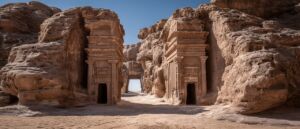


Tunisia, a country with a rich history and remarkable cultural heritage, is a must-see destination for travel and history enthusiasts. Here, the majestic ruins of ancient cities, witnesses of a time when different civilizations crossed paths and left their mark, stretch out under a deep blue sky. In this article we will explore the most beautiful and fascinating archaeological sites in Tunisia, containing the secrets of ancient civilizations.
Cartago: The City of Extinguished Lights
Founded by the legendary Queen Dido according to mythology, ancient Carthage was the pride of the Carthaginian Empire. Situated on a hill overlooking the Mediterranean Sea, Carthage offered a spectacular view that inspired ancient poets. The wealth of its citizens, the Carthaginians, made it one of the most prosperous cities of Antiquity. Even today, the ruins of Carthage attract lovers of culture and antiquity. While exploring its ruins, you can visit the Odeon, the theater, the Antoninus thermal baths, and the many residential neighborhoods whose urban plan can be guessed.
The Memory of Saint-Louis
In 1270, Saint Louis, King of France and leader of the Seventh Crusade, perished before the walls of Carthage, along with a large part of his army. His death was followed by the decline of the city which never fully recovered from the Roman conquest. The sacrifice of Saint-Louis is still commemorated by a monument erected in his memory at Cape Carthage, offering a breathtaking view of the ancient city.
Dougga: The Roman-African City
Listed as a UNESCO World Heritage Site, Dougga is one of the best preserved and most complete sites in Africa. This Carthaginian-Roman city, perched on a hill, was an important administrative and economic center of Carthage. With its imposing temples, Roman theaters and impressive arenas, Dougga is an exceptional witness to the ingenuity and grandeur of these ancient civilizations.
An Exceptional Theater
The Roman theater of Dougga is one of the best preserved in the world. With its stage and stage wall in almost perfect condition, it offers a striking vision of the power and majesty of the spectacles of Antiquity. From the stone cut centuries ago to the unrivaled acoustics, this theater is a marvel not to be missed.
El Jem: The Colosseum of Africa
Nicknamed the “Colosseum of Africa”, the El Jem amphitheater is the fourth largest Roman amphitheater in the world. Built in the 3rd century, it could accommodate up to 35,000 spectators. Even today, its imposing structure bears witness to the grandeur of the Roman world. Every year, music festivals, plays and other events are held there, bringing this extraordinary monument to life.
Arenas in Modern History
The El Jem arenas have been immortalized in the cinema, notably in the film “Gladiator” by Ridley Scott. Their integrity and size make them a remarkable place to dive into history, but also a dramatic location for cultural events.
Thugga, A Citadel in the Clouds
The ancient city of Thugga, today called Dougga, is located in a mountainous region in northwest Tunisia. Named Thugga in ancient times, it was an important city for the Numidians before becoming Roman. Perched on a height, the city of Thugga offers a breathtaking panorama, and its natural setting makes it particularly photogenic.
The Houses of Gods and Men
Thugga is home to some of the best preserved Roman temples in the entire Maghreb, such as the Temple of Minerva, the Capitol, and the Temple of Caelestis. These imposing structures were dedicated to the gods of Roman mythology, and they offer a unique opportunity to feel small in the face of the grandeur of antiquity.
Bulla Regia: The Underground Houses
Bulla Regia is a very special archaeological site, due to its unique underground houses. In Roman times, the city was famous for its luxurious houses whose main rooms were buried underground to escape the summer heat. Today, the remains of these residences offer a fascinating insight into Roman engineering and daily life in ancient times.
The House of Love and Psyche
Among the best preserved houses in Bulla Regia, the House of Love and Psyche is the most famous. Its mosaic floor with varied patterns is spectacular, bearing mythological scenes which give this residence an impressive artistic character. It is a marvel to walk inside this living testimony of Antiquity.
Badac’s opinion!
Tunisia is literally an open-air museum, where each stone tells a story. Archaeological sites such as the cities of Carthage, Dougga, El Jem, Thugga and Bulla Regia are treasures of humanity, preserving the memory of the civilizations that built them.
For travelers looking for cultural adventure, spirituality or simply beauty, Tunisia is a mixture of colors, perfumes, landscapes and ancient remains that still resonate today. It is an invitation to a journey through time, to understand and admire the sumptuousness of the History which has shaped this extraordinary country.
Share this story